


Strategic management for crop sector in protecting the environment
- Green Movement

- Mar 18, 2021
- 2 min read
Agricultural practices, especially pesticides and fertilizers used on crops fed to animals are a major contributor to land pollution. Usage of artificial fertilizers in place of manure can eventually deplete soils, making them lose their ability to hold water and makes them subject to erosion. The agriculture sector makes up one-third of Vietnam’s continuously developing economy. Therefore, it is urgent for the government to foster cooperation and promising plans in acquiring a sustainable, modern agriculture sector.
1. Public-private partnerships (PPP)


In recent years, the government has paid special attention to promoting PPPs in which the government provides public goods to leverage private sector investments to improve commodity value chains. For example, the Loc Troi Group has applied the Sustainable Rice Platform (SRP) standards within the context of applying the “large field” model in the MKD. Similarly, the Rainforest Alliance worked alongside Nestlé, the Sustainable Agriculture Network (SAN), and 4C to assist farmers in adopting sustainable coffee farming practices. To support these partnerships, the government has also financed public infrastructure to improve production efficiency and market access for FOs and agribusinesses. There have been several good PPP models in the agricultural sector. The key constraint in scaling them up is the availability of public funds to meet demand.
2. Value chain approach



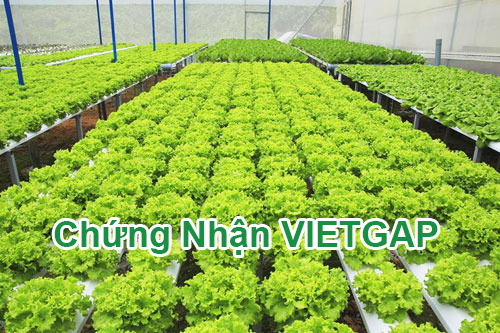
In recent years, programs that support linkages between farmers within an FO( Farmer organization), and between FOs and agribusinesses, have been widely piloted and relatively successful at improving farming practices and value chain efficiency while reducing the environmental impacts of farming. For instance, in the MKD, GlobalG.A.P., VietGAP, and the large field model have been successfully tested with the active engagement of private sector companies (such as Loc Troi Company and others). Similar experiences exist in coffee production in the CH (such as with 7 Nescafé, the Rainforest Alliance,18 and others). Good examples exist at the local level. The key challenge now is to create an enabling legal environment and incentives to scale it up.
3. The burning of rice straw and agricultural wastes after harvest could be significantly reduced if financial assistance were available to farmers to access agricultural machines to collect on-farm wastes more easily
These byproducts have recycling value. Farmers may sell them to buyers or recycle them for vegetable cultivation, mushroom production, and animal feeding. There are no technical issues, but the constraints are the capital investments for farm machinery and the markets for the new products produced from the recycled agricultural byproducts.
4. To reduce disease and pest risks resulting from monoculture, integrated farming systems have been widely developed and spontaneously adopted by farmers in many places
Examples include crop rotation and agroforestry systems in uplands and rice-fish farming systems in low land areas. A benefit of such systems is that they help diversify income sources and reduce pesticide needs. From a technical perspective, no major issues are foreseen. However, to help them become more sustainable in the long term, coordinated planning, improved public services, and market development to support efficient and sustainable diversification are needed.
Hoang Tu Anh
References
FAIRR (2019). "Land environmental damage as a result of intensive farming". Retrieved from https://www.fairr.org/article/land-pollution-as-a-result-of-intensive-farming/#:~:text=Pesticides%20and%20fertilisers%20used%20on,zones%20that%20kill%20aquatic%20life.
Statista Research Department (Dec 9, 2020). "Agriculture in Vietnam - Statistics & Facts". Retrieved from https://www.statista.com/topics/5653/agriculture-in-vietnam/
Tin Hong Nguyen, et al. (2017). "An Overview of Agricultural Pollution in Vietnam: The Crops Sector". Retrieved from https://openknowledge.worldbank.org/bitstream/handle/10986/29241/122934-WP-P153343-PUBLIC-Vietnam-crops-ENG.pdf?sequence=1&isAllowed=y

Comments